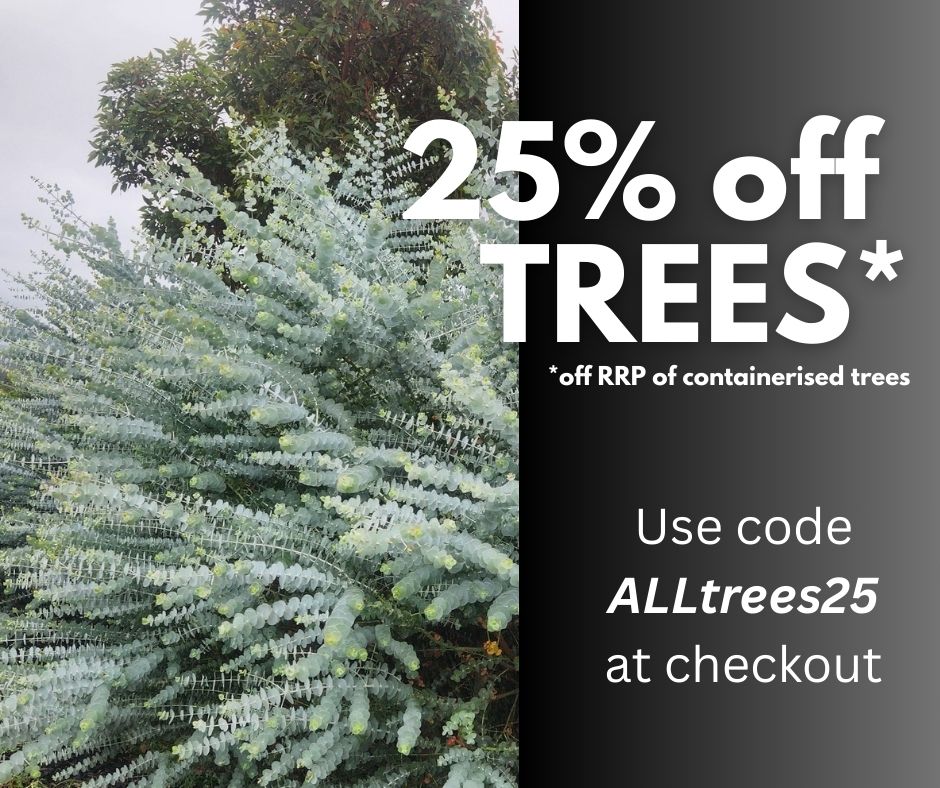
Create or update your garden with 25% off the Retail price of ALL our quality containerised trees! This offer is valid until 30th April 2026. Use code ALLtrees25 at checkout, or CONTACT US directly to order.


How to Choose the Right Tree for Your Home
Look, functionality, taste: Here are some easy principles to get you sorted.
Growing a tree (or trees) is a long-term project with great generational rewards. That makes the decision to purchase a special one worth the time and effort to select the right tree to meet your needs.
Here are some things to consider.
Key factors when choosing a tree for your home:
- Aesthetics - Size, shape, foliage colour, and seasonal changes
- Aspect - Sun exposure and orientation of your property
- Space - Mature tree size vs. available area
- Functionality - Shade, privacy, windbreaks, or fruit production
- Personal preference - Choose a tree you'll love caring for
Let's explore each factor in detail:
Consider Aesthetics and Visual Appeal
Aesthetics and the visual appeal of your outdoor space through your tree selection. You’ll need to consider:
- the size and shape of the tree
- foliage in terms of colour, texture and shape
- sensory elements like fragrance and touch
- and of course seasonal changes, essentially an evergreen tree or a deciduous tree.
Let's take a look at examples of trees for the different aesthetic goals.
Examples of Trees for Different Aesthetic Goals
Most trees cover multiple aesthetic elements.
- Pyrus 'Capital' or Italian Pencil Pines grow tall and straight for growing in narrow spaces, while Manchurian ornamental pear trees are big providers of shade.
- Deciduous trees like Japanese maples provide a dynamic visual effect, with leaves that change colour throughout the year. These trees are bare in winter.
- The iconic native Lemon-scented Gum is so called that because of its lemony-scented foliage, especially noticeable after rain.
- Evergreen Michelia and Magnolia, such as 'Inspiration' produce highly fragrant flowers. Feijoa trees and Arbutus have leathery texturous foliage.
- Native evergreen trees like the flowering gum (Corymbia ficifolia) or Bottlebrush (Callistemon) produce vibrant, colourful blooms in Spring/Summer.
Matching Trees to Your Home's Architectural Style
Keep in mind how the tree will integrate with your home's existing architectural style and landscaping.
A sleek, minimalist garden might benefit from a sculptural tree like a weeping cherry, while a classic garden may pair beautifully with a crepe myrtle or magnolia.
A tree’s colour, texture, and form may complement or contrast with other elements in your outdoor design.
A well-chosen tree can serve as a focal point.

A sleek minimalist garden that would benefit from a sculptural tree
A sleek, minimalist garden might benefit from a sculptural tree like the weeping cherry, while a classic garden may pair beautifully with a crepe myrtle or magnolia. Or low manicured hedging around a focal point to emphasise symmetry.

A tree's leaves complementing the colours of a home
A tree’s colour, texture, and form may complement or contrast with other elements in your outdoor design. For a stylish inner-city Japanese feel, the vibrant red of a Japanese maple complements beautifully with the black wrought-iron fence.

A fully grown Catalpa tree
A well-chosen tree can serve as a focal point. Like this sensational fully grown Catalpa (Indian Bean Tree). For a large tree it is best to be mindful of the space it has to grow into.
Understand Your Property's Aspect and Sun Exposure
Aspect, or orientation, affects your tree’s exposure to sunlight, wind, and shade.
Melbourne's climate is variable: hot summers and cold winters, so understanding the aspect of your garden is crucial for your tree’s health and growth.
A north-facing garden will receive the most sunlight, making it ideal for sun-loving trees like olive trees or lemon-scented gums, while a south-facing garden may be better suited to shade-tolerant species like camellias or ferns.
Don’t forget to consider how the tree’s placement will impact your home and garden throughout the day.
A well-placed tree on the western side of your property can provide much-needed shade during the hot afternoons, helping to reduce cooling costs in summer. However, be careful to avoid planting large trees that might block natural light from entering your home, especially in winter when our days are shorter.

Waterhousea hedge clipped neatly for a boundary fence in Melbourne
Match Tree Size to Your Available Space
The amount of space available in your garden will influence the type of tree you can choose.
Melbourne homes can vary from sprawling spaces to compact courtyards. You’ll need to pick a tree that fits comfortably within the area without becoming overgrown. And don’t plant too close to your fence or walls.
A larger species like a Spotted Gum (Corymbia maculata) is breathtaking but may be impractical for smaller spaces, as its roots require as much space as its canopy. Knowing the size of the mature tree is therefore important when planting a 40cm or 50cm diameter container in your garden.
Best Trees for Small Spaces
For smaller gardens, consider compact or dwarf varieties of natives, standard weepers and trees with a fastigiate form.
When planting, consider the tree’s mature size, including height and canopy spread, to avoid overcrowding and to maintain a balanced garden layout.
Trees with vertical growth habits, like pencil pines, can be excellent choices for narrow spaces while still adding height and greenery.
Check out our collection of trees for smaller spaces.

Foliage planted in a small garden in Melbourne
Think About Functionality and Practical Benefits
Beyond aesthetics and size, think about the functional benefits a tree can bring to your Melbourne home.
A well-chosen tree can provide shade, privacy, windbreaks, and even fruit.
Deciduous trees like Ornamental pears or Liquidambars are ideal for seasonal functionality, offering shade in summer and allowing sunlight to filter through during winter.
If privacy is a priority, evergreen trees such as Lilly Pilly can create natural barriers without the need for fences.
For sustainability, consider planting an edible or fruit tree which can transform your garden into a productive space while enhancing its appeal.
Ultimately, a tree should not only look good but serve a purpose, whether it’s cooling your home, offering a retreat for local wildlife, or providing a serene spot for relaxation.
Choose a Tree You Love
Most important of all - plant a tree you like! If you like the tree you are more likely to look after it!
It is the first step in forming a relationship with a tree, then with your garden and the green environment around you.
You’re the one who has to look at and nurture it. Choose a tree you’ll love. A tree that will spark joy through the years or decades you live at your property.
Learn from Your Local Environment
Your greatest resource is the community around you! Trees grown in neighbouring properties, in streets and parks can immediately flavour the type of tree that works well in your area. From there get to know the species and you're on your way.
Maybe you’re not sure what species it is, or what it is you like about the tree, but you’ve made a start. Try and take a photo. Bring the photo to tree experts like us, and we can advise what tree it is, along with how it grows, its suitability for your property and needs, and whether there are similar varieties that may work better.
Get Expert Help Choosing Your Tree
Trees can make or break your garden. Make the right choice. If you would like help on a project, or want to discuss trees for your home, business, council, or other, please get in touch with our team, who are only too happy to talk all things trees.
Frequently Asked Questions About Choosing Trees
Frequently Asked Questions About Choosing Trees
What's the best tree for a small property?
For small properties, consider compact or dwarf varieties of native trees, standard weepers, or trees with a fastigiate (columnar) growth habit like pencil pines. These provide height and greenery without taking up excessive space.
Should I choose a deciduous or evergreen tree?
It depends on your needs. Deciduous trees like ornamental pears offer shade in summer and allow sunlight through in winter, making them ideal for energy efficiency. Evergreen trees like Lilly Pilly provide year-round privacy and screening.
How do I know if a tree's roots will damage my property?
Research the tree's mature size - both canopy and root system. As a general rule, a tree's roots spread as wide as its canopy. Avoid planting large trees too close to foundations, driveways, or underground pipes. Contact our team for species-specific advice.
What does 'aspect' mean when choosing trees?
Aspect refers to the direction your property faces (north, south, east, or west). This determines how much sunlight different areas receive. North-facing areas get the most sun and suit sun-loving trees, while south-facing areas are better for shade-tolerant species.
Receive all the latest news, product information, collections, projects, tips and special offers straight to your inbox each month or so.
Receive all the latest news, product information, collections, projects, tips and special offers straight to your inbox each month or so.
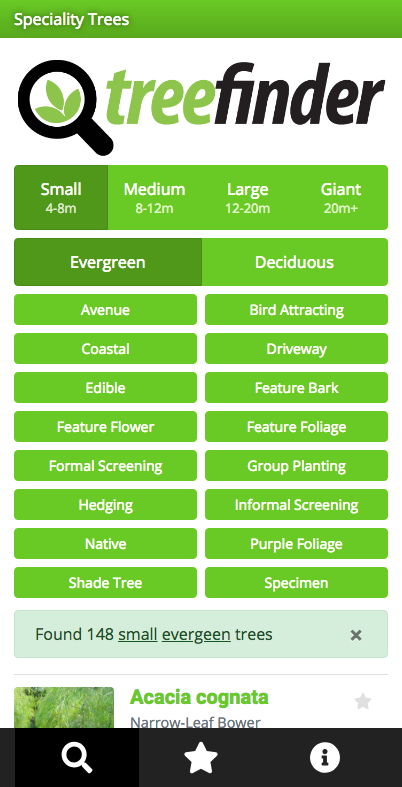
Treefinder can help you identify the perfect tree for your next project!
With over 400 tree varieties for review, the Treefinder app enables you to conveniently browse and compile a list of trees suitable for a number of common landscaping uses - from attracting birds to creating a formal screen or hedge. By selecting desired size, foliage, and a few categories, Treefinder opens up a world of possibilities.
Once you've found the perfect tree you can click through to our website for more information, availability and a quote.

We are specialists in the environmentally sustainable production of premium quality advanced landscaping trees and screens.
For more than 49 years Speciality Trees has been a leader in the production and supply of advanced environmentally sustainable, containerised landscape trees for local government, the landscaping industry and retailers.
Learn more





Trees
© 2026 Speciality Trees Pty Ltd. All Rights Reserved.
Speciality Trees acknowledges the traditional custodians of the lands where we live, learn and work, and acknowledge and respect all who have contributed to it, past, present and future.