SHOP OUR SPRING FLING SALE - 25% OFF ALL TREES NOW! There's no better time to plant once and plant well with our quality stock!

The word ‘deciduous’ means to fall off or shed at a specific season or stage of growth and is typically used in reference to trees or shrubs that lose their leaves. This is a natural process called abscission and, in many cases, although not all, leaf loss coincides with winter.
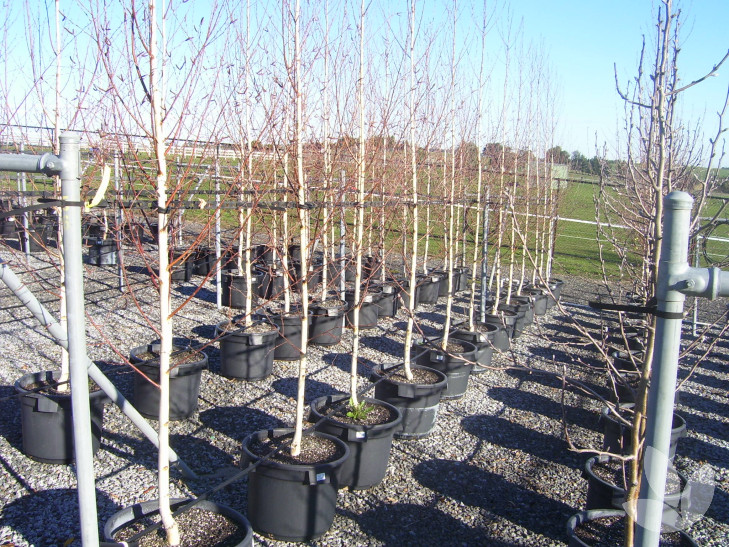
Leaf drop begins when the abscission layer, formed between the leaf petiole and the stem is broken, due to a change in the existence of a plant hormone called auxin between the trunk and the leaf, allowing the leaf to break off. This process starts in autumn. However, before they shed, nitrogen and carbon is removed from the foliage by the tree and stored as protein. It is this protein that assists the development of new foliage and/or flowers in spring.
The take-out here is that while deciduous trees are bare in winter, they are structurally beautiful and full of promise, signalling the beginning of a renewal process.
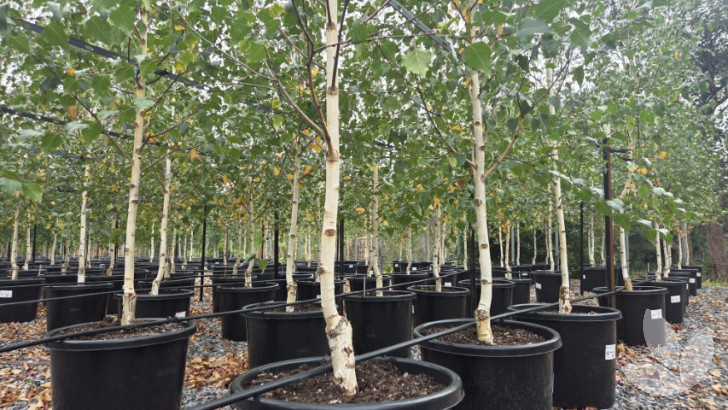
Image: Transition from foliage to bare limbs is underway in the nursery with these 50L Betula pendula ‘Moss White’ May 2026.
At Speciality Trees a significant block of potting takes place when limbs are bare.
As growers, winter is the perfect time to formative prune to promote a robust and balanced framework for continued growth. For the buyer, this structure is exposed to the world so it is the perfect time to appreciate what you are buying. To the landscaper, planting deciduous trees in winter dormancy is a low-risk thing to do.
While it seems a difficult task to sell trees that look like sticks, these trees are loaded with potential and promise of beautiful things to come. The very first sign of warmth will generate a pattern of continual colour change making them the most entertaining and visually stimulating range on offer.
To the buyer and landscaper deciduous stock with interesting bark make fabulous Winter features. Here are four of the best naked specimens for use as Winter features.

Above: The beautiful trunk patterns of Lagerstroemia (Crepe Myrtle). Image: Cheryl Ann Meola/Shutterstock.com
The bark of Lagerstroemia ‘Natchez’ provides colour as the tree matures, with its flakiness revealing a rich, brown under bark making this species a great all-rounder. Abundant flowering, autumnal foliage colour and interesting bark make this species an outstanding landscape favourite.
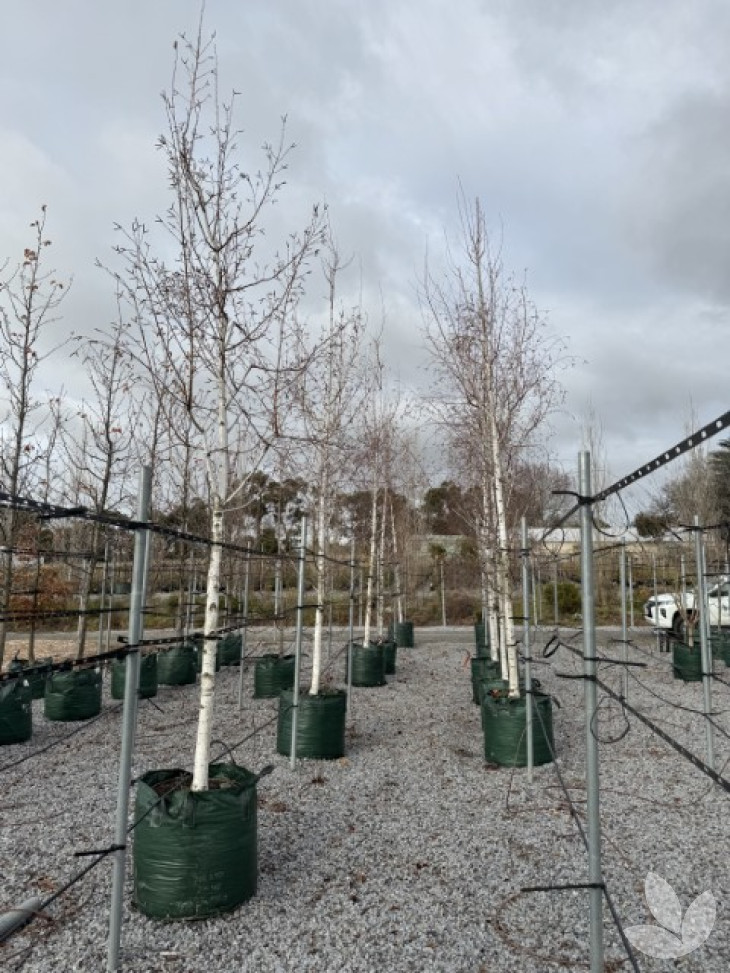
Image: The stunning white limbs of Betula pendula ‘Moss White’ in the nursery May 2026
The trunk of ‘Moss White’ Silver Birch is a grey colour when young that gradually turns to white. It is a pretty tree most of the year with delicate bright green foliage and long hanging pale green catkins but its standout season has to be winter when its textured white trunks are fully exposed. Uplit with spotlights, they make a fabulous winter feature.
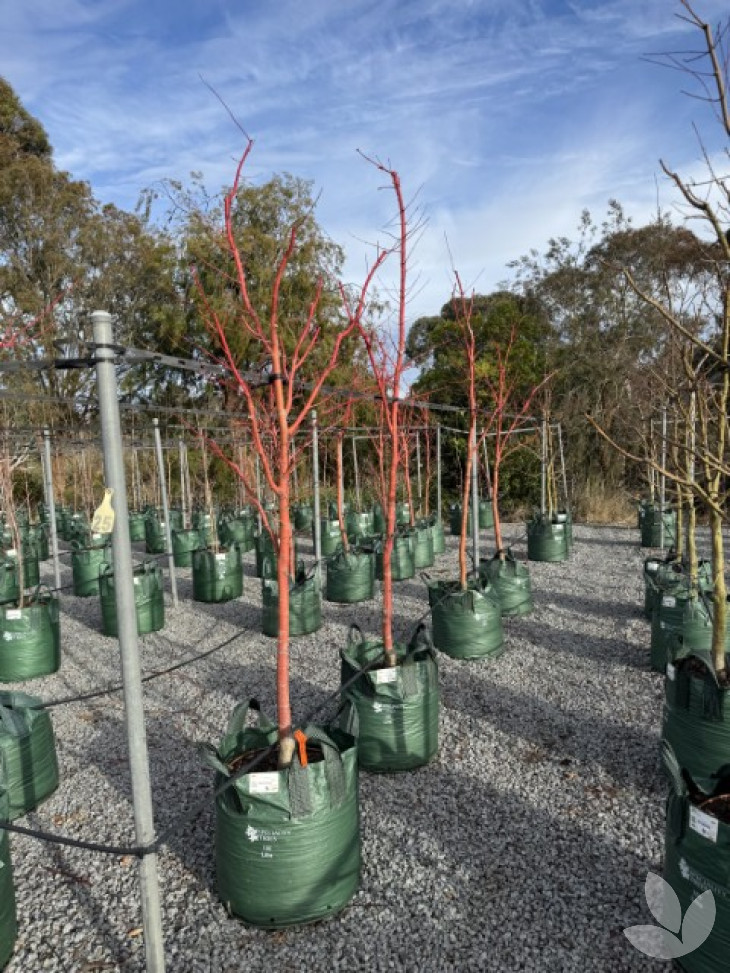
Image: The bright red branches and trunk of Japanese Maple, Acer palmatum ‘Sango Kaku’ (Coral Bark Maple) August 2025
Acer palmartum ‘Sango Kaku’ is a known for its unique red trunk and attractive double serrated leaves. Commonly known as Coral Bark Maple, foliage is green during spring turning bright yellow with an orange tinge in autumn. But when leaves have fallen, their already red bark, seems to turn even brighter making it a knockout feature tree in winter.
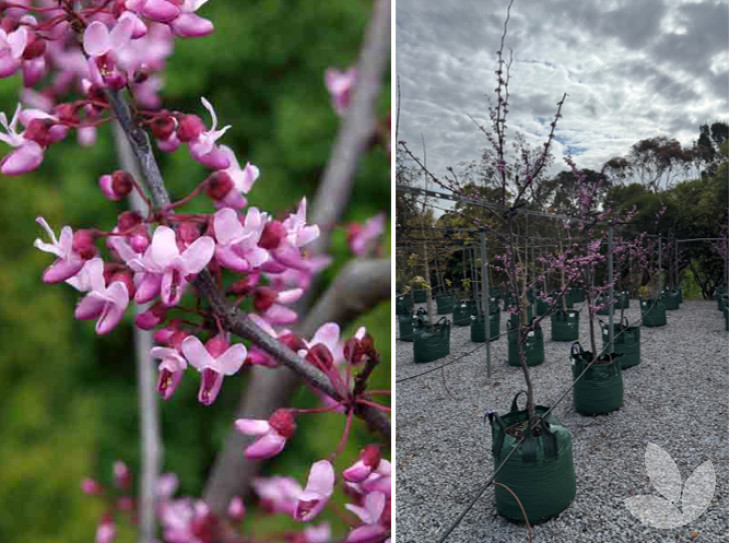
Image: Tight branch flowering of Cercis canadensis ‘Forest Pansy’ August 2025.
Cercis canadensis ‘Forest Pansy’ is another all-rounder given its winter branch colour. After a multi-coloured foliage display in autumn, smooth dark brown branches beautifully transform with late winter pink blossom. These small pea-like flowers tightly hug the branches resulting in a stunning specimen at a time when not much else is in colour.
Who said Winter landscapes are boring! Including one or more deciduous trees with showy ornamental bark in your garden ensures your landscape has year-round appeal. Bark is an asset and a feature, so think about what you plant with these trees and consider a backdrop of evergreen to maximise their beauty.
For more selections and tree advice, contact the team.



Receive all the latest news, product information, collections, projects, tips and special offers straight to your inbox each month or so.
Receive all the latest news, product information, collections, projects, tips and special offers straight to your inbox each month or so.
Find a Tree
With more than 400 trees in our library we can help you find the perfect tree for your next project.
Ask a question
We're here to help if you need any advice on selecting the perfect tree for your next project.
Newsletter
Receive all the latest news, product information, collections, projects, tips and special offers straight to your inbox each month or so.
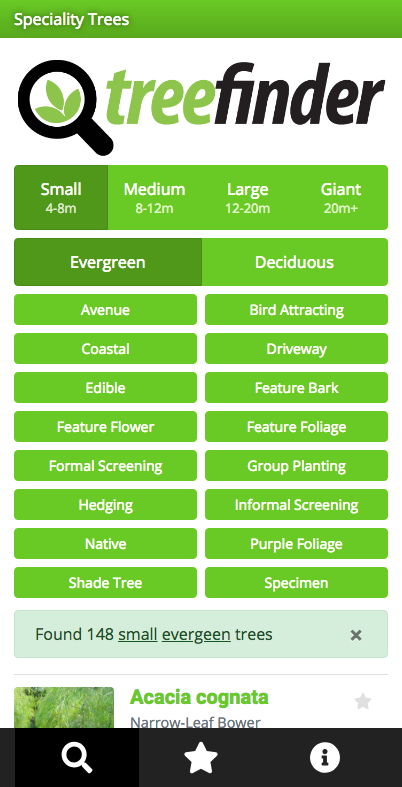
Treefinder can help you identify the perfect tree for your next project!
With over 400 tree varieties for review, the Treefinder app enables you to conveniently browse and compile a list of trees suitable for a number of common landscaping uses - from attracting birds to creating a formal screen or hedge. By selecting desired size, foliage, and a few categories, Treefinder opens up a world of possibilities.
Once you've found the perfect tree you can click through to our website for more information, availability and a quote.

We are specialists in the environmentally sustainable production of premium quality advanced landscaping trees and screens.
For more than 49 years Speciality Trees has been a leader in the production and supply of advanced environmentally sustainable, containerised landscape trees for local government, the landscaping industry and retailers.
Learn more




Trees
© 2026 Speciality Trees Pty Ltd. All Rights Reserved.
Speciality Trees acknowledges the traditional custodians of the lands where we live, learn and work, and acknowledge and respect all who have contributed to it, past, present and future.